Ethernet Splitter vs Switch: Why Splitters Cap You at 100Mb
An Ethernet splitter does not do what the name suggests. It will not take one port on your router and turn it into two working connections, and if that is what you are trying to do, buying one will waste an evening. What it actually does is squeeze two separate network links down a single cable, which is a narrower and much more specific job.
A switch is the thing most people are looking for. This page explains the difference in terms of what is physically happening in the cable, so you can tell in thirty seconds which one your situation needs.
What is actually in the cable
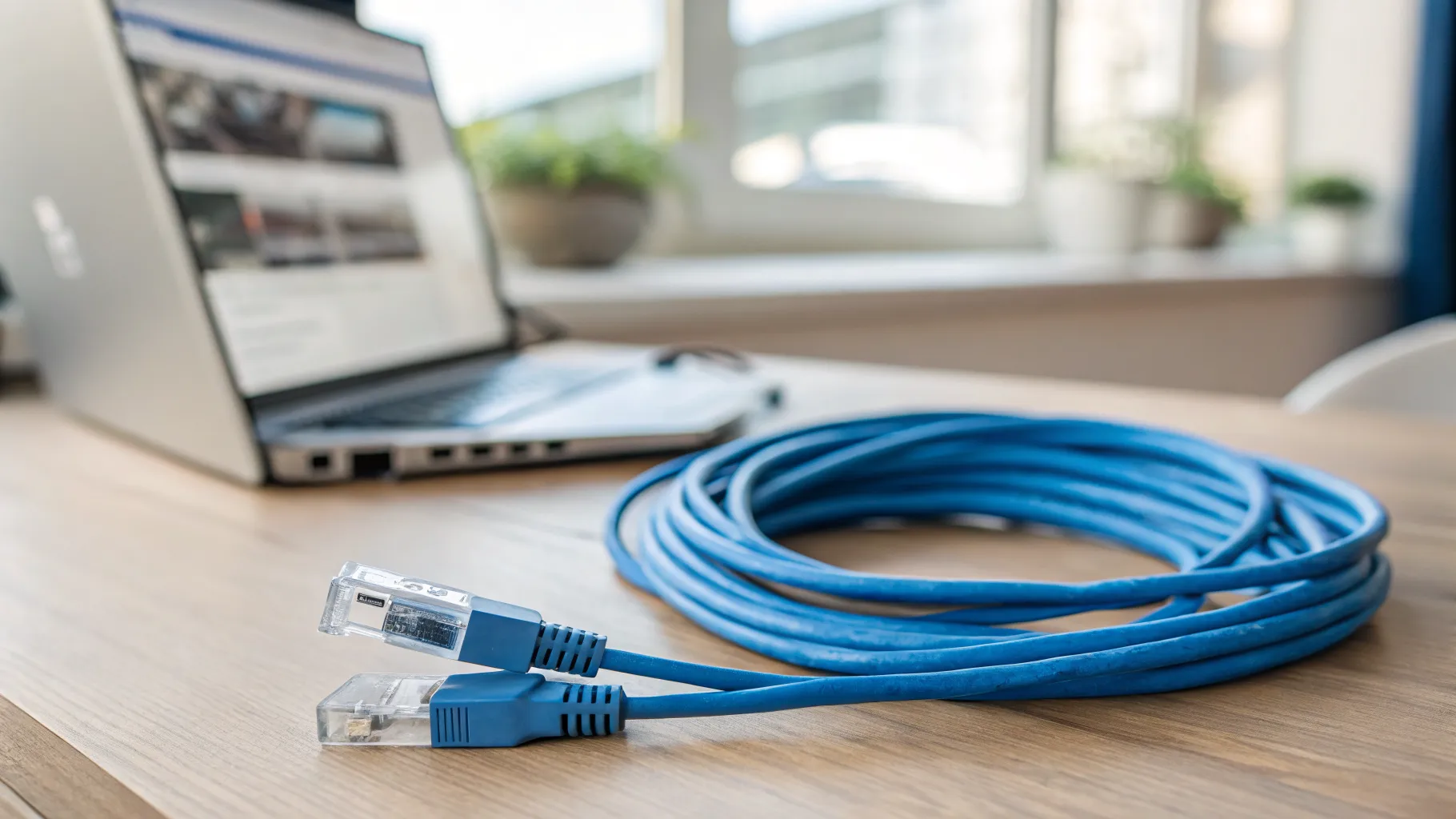
A standard Ethernet cable contains four twisted pairs, eight wires.
10 and 100 Mbps Ethernet only uses two of those pairs. One pair transmits, one receives, and the other four wires sit there doing nothing. That spare capacity is the entire basis of the passive splitter.
Gigabit Ethernet uses all four pairs, transmitting and receiving on every one simultaneously, which is how 1000BASE-T works over twisted pair. So does 2.5 Gbps and everything above it. There is no spare capacity left to borrow.
That single fact produces every limitation that follows.
What a passive Ethernet splitter really does
A passive splitter is wiring, not electronics. There is no chip, no power supply, no forwarding decision, no traffic management. It maps one connection onto one pair-set and a second connection onto the other pair-set.
Which means:
You need two of them, one at each end. A splitter on its own is useless. One splitter combines two links into a single cable at one end; the second splitter separates them again at the other. They are sold in pairs for this reason, and people who buy a single one are often confused about why nothing works.
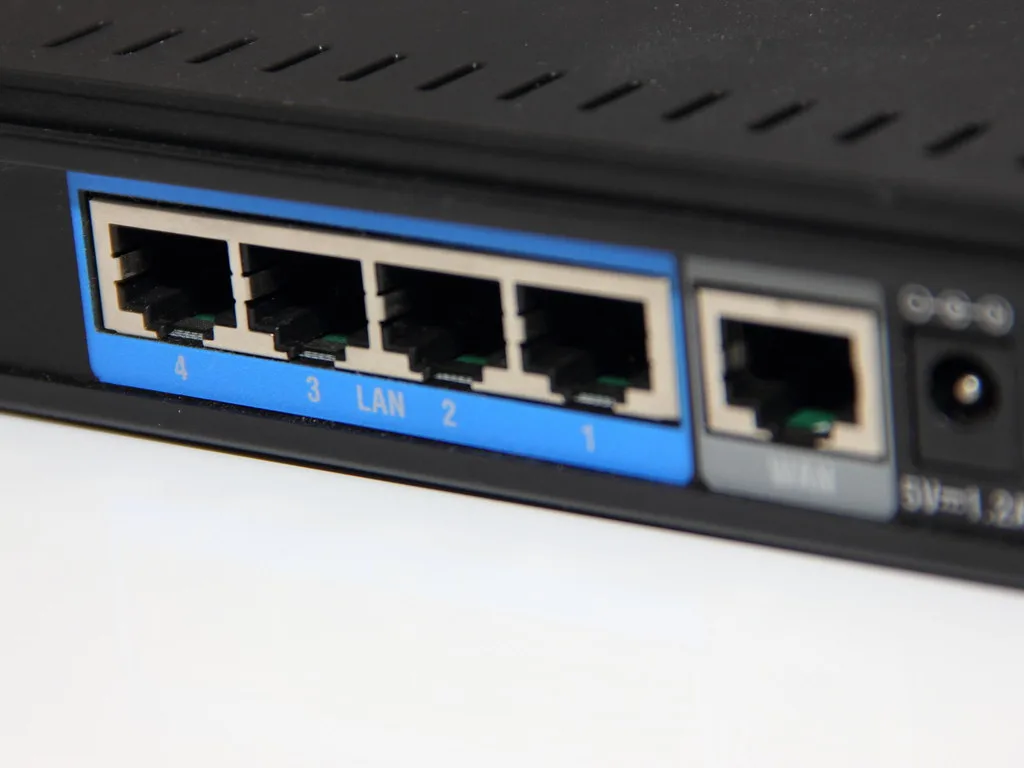
You still need two source ports. This is the misconception that sends people wrong. A splitter does not create a connection out of nothing. At the router end you plug two router or switch ports into the splitter. If you only have one free port, a splitter cannot help you.
Each link is capped at 100 Mbps. Two pairs each, so 100BASE-TX is the ceiling. On a UK connection of 500 Mbps or 1 Gbps, that is throwing most of your line away on those two devices.
Power over Ethernet stops working. PoE injects power onto the pairs, and a passive splitter rearranges them. If you are feeding a camera, an access point or a doorbell, a splitter will break it. Read our PoE switch guide instead.
Confusingly, “PoE splitter” means something entirely different. A PoE splitter takes a single PoE cable and separates data and power at the far end, so you can run a non-PoE device from a PoE port. Useful, but unrelated to the passive splitters described here. The shared word causes a lot of wrong purchases.
What a switch does instead
A switch is an active device with a power supply and a chip. It reads the MAC address on each frame and forwards it only to the port where that device lives, learning the layout of your network as it goes.
Every port gets full speed. A gigabit switch gives each connected device a gigabit link, not a share of one. Traffic between two devices on the switch does not touch the rest of the network at all.
One cable in, several out. This is the thing people actually want: a single run to the office, a switch on the desk, and four devices on the end of it at full speed.
No pairing, no second unit. One switch does the job.
The trade-offs are small: it needs a mains socket, and a cheap unmanaged one is very cheap. Our gigabit network switch guide covers what to look for and how many ports to buy.
Which one do you need?
Answer these in order.
Do you have one cable to a room and several devices at the far end? Buy a switch. Put it at the far end. This is the common case and the splitter is the wrong tool.
Do you have one cable run and need two independent links at each end, with two free ports at the source? A splitter pair is legitimate here, as long as 100 Mbps each is enough. Typical valid cases: an old cable buried in a wall you cannot replace, feeding a printer and a smart TV that will never saturate 100 Mbps anyway.
Do you need gigabit at the far end? Switch. A splitter cannot do gigabit, ever, regardless of the cable category.
Are you powering the far-end device over the cable? Switch, specifically a PoE switch. A passive splitter breaks PoE.
Is the run long, or outdoors, or through a wall you would rather not open? Before either, read running Ethernet cable through a house and long Ethernet cable guide. Sometimes the honest answer is a second cable, and sometimes it is powerline adapters or mesh instead.
For almost every British home, the answer at the end of that list is a switch. Splitters survive mainly because they are cheap and the name is misleading.
Cable quality does not rescue a splitter
A frequent follow-up: “I have Cat6, so surely the splitter will do gigabit?”
No. The cable category tells you the bandwidth and crosstalk performance the cable supports, not how many pairs are connected through to each device. A splitter deliberately delivers only two pairs to each link, so gigabit cannot negotiate no matter how good the cable is. Cat5e already handles gigabit perfectly well; see Cat 6 Ethernet cable for when the upgrade is worth it.
If a link that should be gigabit is negotiating at 100 Mbps, a miswired or damaged pair is a common cause, whether or not a splitter is involved. Our Ethernet wiring diagram shows the correct T568B arrangement, and Ethernet connected but no internet covers the other usual suspects.
Quick comparison
| Passive splitter | Switch | |
|---|---|---|
| Sold in pairs | Yes, one at each end | No, one unit |
| Free ports needed at source | Two | One |
| Maximum speed per link | 100 Mbps | Full gigabit or faster |
| Needs mains power | No | Yes |
| Works with PoE | No | Yes, with a PoE model |
| Turns one port into many | No | Yes |
| Typical use | Two links down one existing cable | Several devices from one cable run |
Frequently asked questions
Does an Ethernet splitter reduce speed? Each link through a passive splitter is limited to 100 Mbps, because only two of the cable’s four pairs are available to it. It does not halve a gigabit connection so much as prevent gigabit from being negotiated at all.
Can I use an Ethernet splitter for gigabit? No. Gigabit Ethernet needs all four pairs in the cable, and a passive splitter allocates two pairs to each of the two links. No cable category changes this. Use a switch.
Do Ethernet splitters need to be used in pairs? Yes. One combines two links onto a single cable and the other separates them at the far end. A single splitter on its own will not produce a working connection.
Can a splitter turn one router port into two connections? No, and this is the most common misunderstanding. You need two live ports at the source end feeding the splitter. If you have one free port and several devices, you need a switch.
Is a switch better than a splitter? For almost every home situation, yes. A switch gives each device full speed, needs only one source port and one unit, and supports PoE models. A splitter’s only advantage is that it needs no power and can carry two links down a cable you cannot replace.
Will adding a switch slow down my network? No. An unmanaged gigabit switch forwards traffic at line rate and adds a negligible delay. Traffic between two devices on the same switch does not even reach the router, which can reduce load elsewhere.
What about a PoE splitter, is that the same thing? No. A PoE splitter separates power and data from a PoE feed so a non-PoE device can be powered over the cable. It is a genuinely useful device that happens to share a name with the passive splitters this page is about.