Broadband News: £11 BBC Levy Floated, Copper Safety Net
Three things landed this week that will show up on a home broadband bill eventually: a proposal to fund the BBC from one, a confirmed price for the old copper phone line nobody has migrated yet, and two Ofcom investigations into the phone numbers scammers are calling you from. Here is what each one actually says.
A think tank has proposed an £11 monthly levy on broadband bills to fund the BBC
The Social Market Foundation, a cross-party think tank, has put a “Home Internet Levy” of £11 a month to the Culture Secretary, Lisa Nandy. It would replace the TV licence fee, currently £180 a year, with a charge collected through broadband bills. A smaller alternative was also floated: a £2.30 a month “News and Culture Levy” added on top of the existing licence fee rather than replacing it.
Nothing has been decided. A DCMS spokesperson said the BBC “must be funded by a model that is sustainable and fair to all those that are paying it”, and that the government is looking at a range of options including efficiency and commercial revenue. The Internet Services Providers’ Association is against it, saying a tax on broadband bills “would not be invested into broadband networks or services” and so would not benefit customers.
Worth noting the arithmetic before anyone celebrates. £11 a month is £132 a year against a £180 licence, so it is cheaper per household, but it would be unavoidable for anyone with a broadband line, including the people who currently pay nothing because they do not watch live TV. The report is covered at ISPreview.
Openreach has put a price on missing the analogue switch-off
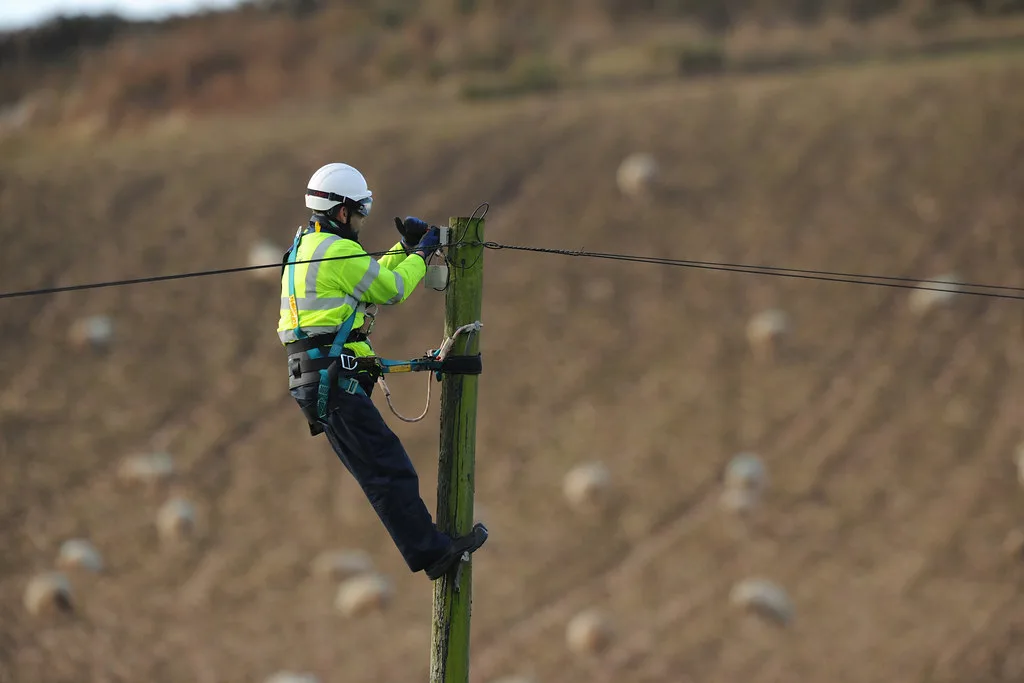
The old copper phone network closes on 31 January 2027. Openreach confirmed this week what happens to lines that have not migrated by then, and the answer is not a hard disconnection. Customers left on the old network get Emergency Voice Access, a limited last-resort service, and Openreach has widened it: where technically possible eVAC will now keep the linked broadband service running too, covering legacy ADSL, FTTC and G.fast lines. That is a change from the original voice-only design.
The wholesale prices are £35 a month excluding VAT for WLR3 Basic and £38.60 for WLR Premium. Those are the prices providers pay, not retail prices, but they tell you the direction of travel: staying put will cost noticeably more than a standard digital line. Business lines, which previously had no protection at all, are now covered by the same safety net, which matters for card terminals and lift emergency phones.
About 1.2 million lines are still to migrate, including 350,000 business premises, out of roughly 15 million already converted. If you are still on an analogue line, or you have a telecare alarm plugged into one, the time to ring your provider is now rather than in January. Our guides to broadband without a phone line and VoIP adapters cover what a digital voice line needs. Details at ISPreview.
Ofcom is investigating Vonage and Voxbone over numbers used for scams
Ofcom opened two separate investigations on 24 September into Vonage Business Limited and Voxbone SA, both cloud and VoIP phone providers. The regulator says phone numbers held by the companies are being “misused, including to perpetrate scams”, and is looking at compliance with General Condition B1, which requires providers to do proper know-your-customer checks on business clients, monitor accounts for number misuse, and act when misuse is reported.
Do not expect a quick answer. Ofcom’s own timetable points to outcomes around late spring 2027 or later, and possible consequences are fines and forced process changes. The practical takeaway is unchanged: a UK landline number in your caller display proves nothing, because numbers are cheap to rent and easy to present. Read more at ISPreview.
A new study benchmarks how much malware free DNS providers actually block
Also published this week, a study comparing how well free third-party DNS resolvers block malicious domains. Switching your router’s DNS to a filtering resolver is one of the few genuinely free security upgrades available to a home network, and it costs nothing to try, but the blocking rates vary a lot between providers and none of them catch everything. Treat it as one layer rather than a fix, and change it on the router so every device on the network is covered rather than one laptop: our router login guide covers getting into the settings page. The write-up is at ISPreview.